











Description
Custom Patty Paper Designed for the Real Kitchen and the Counter
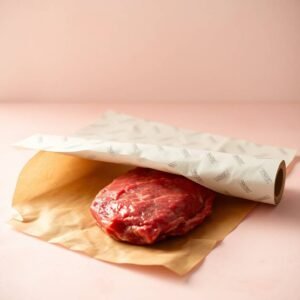
Most UK packaging suppliers treat patty paper as an afterthought, a generic food-safe sheet with a logo slapped on. Anyone who has worked a busy burger service knows there is nothing generic about it. The wrong grade tears on a wet patty. The wrong size lets stacked patties fuse at the edges. Wax coat on a deep-freeze product leaves your prep team wrestling a block of frozen beef apart at service time. These are not minor inconveniences; they cost real labour, real waste and real kitchen reputation.
We have built our custom patty paper range around the way UK food businesses actually work, from the hand-press in an artisan butcher’s back room to the automatic forming lines in a mid-scale meat processing facility. The paper performs where it matters: clean non-stick release, shape retention, freezer stability and, when printed, a brand presence that travels from the kitchen to the customer’s hands.
Two Jobs, One Sheet
Patty paper has always done double duty in kitchens that think about it clearly.
The functional job is separation and protection. A properly specified patty separator keeps raw patties hygienic and individually retrievable, stops frozen patties fusing into an unusable block, protects the shape of a freshly formed patty during stacking and chilling, and prevents freezer burn on stored product. Get this job wrong and your prep efficiency and your food quality both suffer.
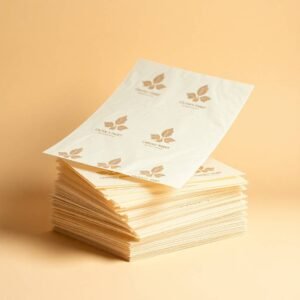
The brand job is the bonus. Because the same sheet often ends up as the liner under the finished burger on a tray or in a basket, a printed sheet turns a hidden consumable into a visible brand touchpoint. Your logo reaches the customer without spending another penny.
What Type of Patty Paper Does Your Kitchen Actually Need?
This is the question no UK competitor answers properly, so let us settle it here. The coating is everything, and different coatings exist for genuinely different jobs.
| Paper Grade | Coating | Release Performance | Best Application |
|---|---|---|---|
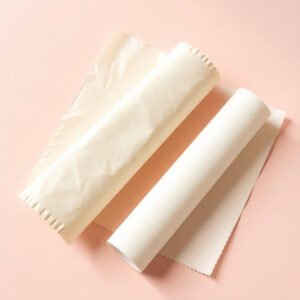
| Dry wax | Light wax coating | Good, moisture resistant | Fresh and chilled patties, everyday service |
| Silicone coat (silcoat) | Silicone release layer | Excellent, freezer-stable | Deep-frozen patties, high-volume processors |
| Double wax laminate | Two waxed sheets bonded | Superior separation | Frozen and chilled at scale |
| PFAS-free greaseproof | Fluorine-free barrier | Good, grease and moisture | Eco-focused operators, serving and wrapping |
| Uncoated food-grade | None | Basic separation only | Cooked or drier items, presentation use |
The rule of thumb is straightforward. If your patties go into the freezer, you need silicone coat or double wax laminate. If they are fresh and chilled, dry wax gives you clean release without over-engineering the spec. If you are using the paper primarily as a serving liner or a branded wrap, a PFAS-free greaseproof grade keeps you plastic-free and recyclable.
Single Ply or Double Ply?
Single ply is the right call for fresh meat and everyday separation. It releases cleanly, runs efficiently through hand presses, and is the most cost-effective option for restaurants and butchers. Double ply is designed for the freezer, where two bonded or laminated sheets peel apart cleanly even after extended frozen storage, something a single sheet often fails to do when it has frozen onto the meat surface.
Machine Compatibility, Because It Matters
A question every butcher and meat processor asks and almost nobody answers: will this patty paper run on my machine?
Our patty paper is available in formats compatible with the major automatic patty forming and interleaving machines used in UK meat processing, including GEA CFS (Koppens), Deighton, Holymatic and Provatec forming lines. If you run an automatic line, tell us the make and model when you request your quote and we will confirm the correct roll width, sheet dimensions and stiffness specification before a single sheet is printed. Getting this wrong wastes paper and blocks production lines, so we take it seriously from the first conversation.
For hand-press and manual operation, our pre-cut interleaved sheets are available in the standard sizes below and bespoke dimensions to suit any press diameter.
Sizes That Match UK Burger Presses
| Format | Dimensions | Weight | Best For |
|---|---|---|---|
| Small square | 100 x 100mm | 25gsm to 35gsm | Sliders and mini patties |
| Standard square | 130 x 130mm | 30gsm to 40gsm | Standard 4-inch burger press |
| Large square | 150 x 150mm | 30gsm to 45gsm | Quarter-pounder and 5-inch press |
| XL square | 180 x 180mm | 35gsm to 50gsm | 6-inch press, smash burgers and flat-top use |
| Custom | To your specification | Advised on request | Bespoke presses and automatic lines |
The Smash Burger Question
Smash burger restaurants have become one of the fastest-growing food formats in the UK, and smash patty paper has a specific requirement that standard separator sheets do not always meet. When you press a ball of beef hard onto a screaming hot flat-top, the paper needs to release the meat cleanly mid-smash without tearing, scorching or sticking to the griddle surface. A smooth, dry wax surface in a heavier gsm, typically 40gsm to 50gsm, handles this reliably. If you run a smash concept, tell us and we will spec the right grade for your workflow.
Plant-Based and Vegan Patties
Plant-based patties behave differently from beef. They tend to be stickier, softer and more fragile, which means they need a paper with a higher release performance, typically silicone coat, and a slightly heavier gsm to support the shape through stacking. If you produce plant-based burgers, vegan sausage patties or non-meat alternatives, we will match the spec to your product rather than defaulting you to a standard beef grade.
Meat Blush and Display Case Use
Here is something almost no UK supplier mentions. For butchers displaying fresh patties in an open or chilled display case, the paper underneath the patty affects the appearance of the meat. A meat market paper, sometimes called a display paper, is designed to allow the natural red colour of fresh beef to show through clearly while protecting the base of the patty from moisture. If your patties are displayed raw and you are losing customers because the product looks grey or wet underneath, the paper is very likely part of the problem. Ask us about our meat display grade and we will explain how it works.
Food-Safe, Compliant and Audit-Ready
Patty paper is in direct contact with raw meat, which puts it in a different compliance category from most packaging. Our food-grade stock is intended for food contact in line with UK food-contact materials regulations, including retained Regulation (EC) No 1935/2004 and the applicable good manufacturing practice standards. We print with food-safe, low-migration inks and, where print is on the non-contact face, your branding never touches the meat. We can supply a Declaration of Conformity for your chosen specification, which gives you the documentation your environmental health officer, retail buyer or supermarket audit will ask for. If you supply a major retailer or food service chain, ask us about this up front and we will make sure the paperwork is ready when your account manager needs it.
The Commercial Case: Branded Paper Without the Catch
No plate or origination charges. The cost of printing plates is absorbed by us, so branded patty paper is within reach for a single site or an independent operation without a large packaging budget.
Minimums from just 100 units. You do not need to buy a pallet to print your name on the paper. Start at 100, scale to bulk wholesale volumes as your operation grows, and never commit to more stock than you can use.
8 to 10 working days, made in the UK. Printing locally means a turnaround you can actually plan around. No port delays, no customs queues, no guessing games.
Sustainability Worth Talking About
Uncoated food-grade and PFAS-free greaseproof grades are the most sustainable options in the range: widely recyclable, compostable, and free of the fluorine chemistry that tightening domestic and European regulation is steadily restricting. Wax-coat and silicone-coat grades are less straightforward at end of life because of their functional coatings, but they are still paper-based rather than plastic, which keeps the environmental footprint manageable. If you operate under a sustainability policy or report under Extended Producer Responsibility (EPR), we will tell you plainly what each grade’s end-of-life position is so you can make an informed choice rather than taking a supplier’s word for it.
How to Place an Order
Ordering with us is straightforward, and our 24/7 support team is with you at every step.
- Request your quote. Tell us your patty size, paper grade, quantity and whether you run a hand press or an automatic line. We will return a tailored, no-obligation quote the same working day.
- Get free design support. Send us your logo and any artwork requirements. Our in-house designers build a custom template for your sheet and apply your design ready for print, at no cost.
- Approve your proof. We send a digital proof before anything goes to press. Physical samples are available on request, which we strongly recommend if you are switching grade or machine format for the first time.
- We print and deliver. Your order is made here in the UK and dispatched within 8 to 10 working days of approval.
Order Your Custom Patty Paper Today
Your patties deserve paper that performs in the freezer, releases cleanly on the line and carries your brand to the customer without a second thought. With food-grade, machine-compatible grades, branded print in food-safe colour, no plate charges, minimums from 100 units and a dependable 8 to 10 working day turnaround printed right here in the UK, this is custom patty paper built for the way real food businesses operate.
Get Your Free Quote | Free Design Support | Speak to Our 24/7 Team
Tell us your patty size, press type, paper grade and quantity. We will have a quote back to you the same working day, with a Declaration of Conformity available and machine compatibility confirmed before a single sheet is printed.
Why food businesses choose Hexa Custom Boxes: No plate charges. Low MOQs from 100. 8 to 10 day turnaround. Machine-compatible grades. Food-safe, compliant stock. Free design service and 24/7 support, every order.